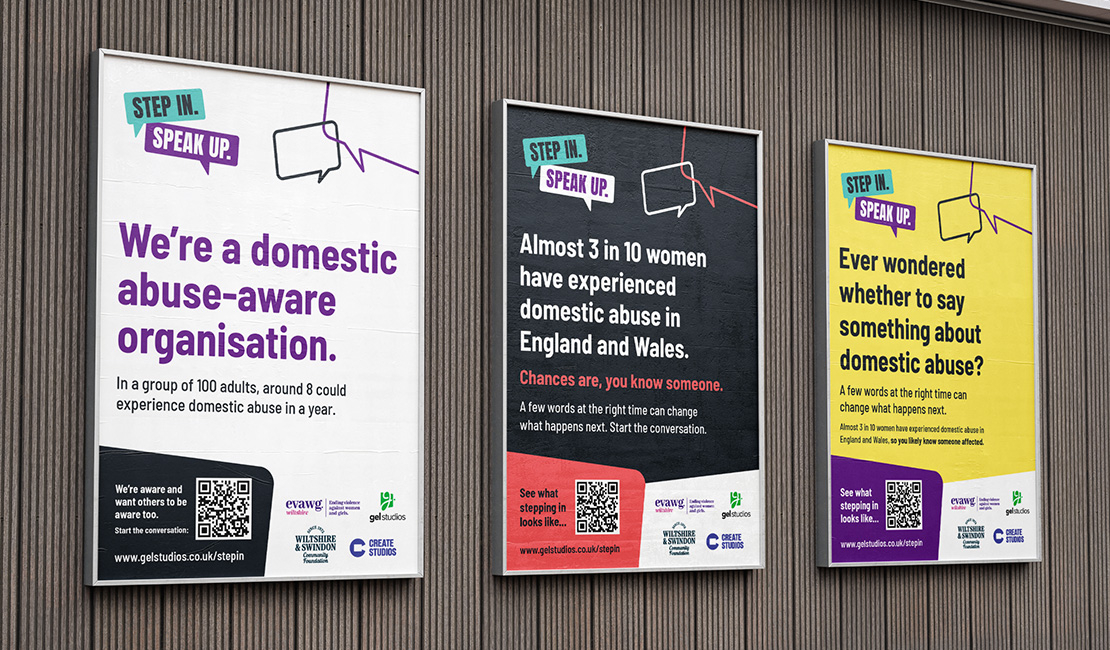

Whichever one you are, you may have seen the moment and wondered whether to say something.
A mate’s comment that went too far, a woman who's gone quiet, an excuse that didn’t add up. Almost 3 in 10 women have experienced domestic abuse in England and Wales, so you likely know someone affected. That moment of wondering is a chance to step in. It’s where the conversation starts - and it can be with her, or with him.
At work, at school, at the pub or the match, the moment comes. Stepping in is a few words at the right time. Two films show how.

Meet Colin.
He could be any one of us.
Father, son, brother, friend and a boss. He’s a good guy, ask anyone. Someone around him is living with domestic abuse, and he hasn't seen it. Yet.
He could be any one of us. And he could be the one who makes a difference. Stepping in starts with a conversation.
For employers, stepping in isn’t a soft skill. It’s a legal one.
Would you know what to do if a member of your team was experiencing domestic abuse? Your duty of care covers people working from home too.
As an adult, your example reaches further than you think.
Dad, uncle, coach, mentor, mate: young people notice what the adults around them say and do. When that example is a good one, it shows up in the corridor, the classroom and the group chat.
This is what stepping in looks like at school.
Chances are, you know someone living with domestic abuse.
Many people get involved once they've seen it up close. It doesn't have to wait.
Family, friends, the team, the lads at the pub or the match. In the year to March 2025, domestic abuse affected 3.8 million people in England and Wales, and fewer than 1 in 5 victims of partner abuse reported it to the police.
Someone you know is living with this, and they may not have told anyone. You could be the person who notices.
Almost 3 in 10 women have experienced domestic abuse since the age of 16 in England and Wales.
3.8million
People were affected by domestic abuse in England and Wales in the year to March 2025. That’s more than the population of Wales.
1/5
Fewer than 1 in 5 victims of partner abuse actually report it to the police.
23 seconds
Is roughly how often police in England and Wales record a domestic abuse incident or crime.
Are you an employer?
“I didn’t know” isn’t a defence.
Domestic abuse is part of an employer's duty of care.
Not everyone is safe at home.1 in 4 adults in England and Wales have experienced domestic abuse. That includes people on your payroll, in the office and working from home. Most businesses plan for cyber attacks, and with good reason: 43% of UK businesses identified a breach or attack in the last 12 months. Domestic abuse is a risk to your people too, and the duty of care already covers it. So why protect your systems and not the people in them?
You should know:
Employers have a responsibility to support employees experiencing domestic abuse.
In an organisation of 100 people, around 8 employees could experience domestic abuse each year.
Failing to address domestic abuse within the workplace could result in higher business costs (absenteeism, productivity, staff turnover).
Not sure what to do? Recognise. Respond. Refer.
You’re not expected to be an expert. You’re expected to notice, ask and point to help.
Free downloadable posters and social media graphics.
Download free posters and social graphics to share with your team, your club or your community. The more people who see them, the easier it is for someone to say something at the right time.