What Makes It GEL: Costs of In-house vs Agency
Sophie Harflett (00:00):
Hello, and welcome to “What Makes It GEL”. I’m Sophie from the GEL Studios team, and today we’re talking about the practical realities between partnering with an agency and hiring in-house. Joining me today is David, who is our head of growth at GEL Studios. Thank you so much for joining me today.
David Golding (00:20):
It’s a pleasure.
Sophie Harflett (00:20):
In terms of your role at GEL Studios, you help us sort of bring in, nurture and secure opportunities so we can keep doing what we do best, but also you support clients, ensuring that their growth is within what they’re trying to achieve. So in terms of what we are discussing today, it’s very much continuing on from the conversation that I had with Stacey in the last video where we were discussing in-house versus agency. Now, your wheelhouse is very much sales led and getting clients through the door and helping their growth as well. So when it comes to in-house and agency, I would love to learn a little bit more about where you come in, what you do, because I’m part of the delivery team, so I’d love to know a bit more about your side of things and where you come from it.
David Golding (01:10):
Yeah, yeah, sure. So really, my role spans across three different areas. So one is sales, so that is obviously bringing in new clients to work with. It’s also client success, so making sure that we are succeeding in every way for the clients that we have, and also responsibility for ensuring that GEL continues to grow as well. So as part of that role, one of my big focus is obviously on making sure that we are, in order for us to grow in the right way, we have to know who we can help and which organisations we can help the most, where our best fit is. So generally, we fit with clients when they don’t have necessarily the in-house capacity or resource or expertise to fulfil a number of different agendas within marketing, design, or web and web design. So there’s a few different areas that we can obviously cover. We generally work with organisations on a retainer basis, which means that quite often we will either support an internal team or we can actually work as a completely outsourced solution covering all of those areas for them.
Sophie Harflett (02:34):
So thank you for that insight on how you work with GEL Studios and how you approach clients as well. When it comes to getting new clients in the door, what kind of conversations are you having? What sort of potential objections are you having to overcome? Is that more cost based? Is it timescale based? What kind of conversations do you have to get people through the door?
David Golding (02:59):
Sure. Well, it all starts with a need, right? So there are organisations out there that will have specific goals that they have for their organisation, often to maintain or grow their market share or grow in what they’re doing. So we’re agnostic when it comes to clients, so we work with charities and organisations like the RSPCA all the way through to Toshiba TEC and other large organisations such as that, and lots of smaller local businesses as well. But the through line really is where we fit with them. And often that is based on an individual need within a business. So it might be that they’ve got a small, internal marketing team that doesn’t have expertise maybe in a couple of different areas, so they need support in those areas. And what we do is we look at how we can best support that, but not only to work with them in terms of completing tasks, but we look at that, we work with them in a way that we can actually help them achieve their organisational goals. So we are very much a strategic partner to those organisations that we work with.
Sophie Harflett (04:21):
Yeah. So as a strategic partner, that is a very full-service type thing. You take on their needs to make sure that they can achieve what they want to achieve. In terms of how you have those discussions with potential clients and prospects, let’s say they were also thinking about maybe they could hire in-house versus working with an agency like ourselves, what is the practical costs around that? Is it more effective for them to maybe partner with us because they get the expertise of a whole group of people, or is it more cost-effective for them to hire someone in-house?
David Golding (05:00):
Sure. So cost is obviously really important when it comes to engaging with any business or any supplier. So I think that conversation, I had a conversation earlier today with a business that they are channelling most of their marketing through one person at the moment, so that is one outsourced person. But equally, channelling all of the marketing responsibility on all those multiple different areas of expertise through one person, extremely challenging thing. Marketing is extremely wide and varied, let alone when we start to talk about web design and development and all the other services that we offer as well. So I think what it’s important to look at really when you’re looking at in-house versus external and the costs that are involved is actually what do you want and what is the return on investment that you’re likely to get from it? Because businesses and organisations are going to be looking at actually, if I hire somebody internally, what is ultimately going to be the return on my investment? And I guess where we sit is that we, as a business, we work to outcomes rather than outputs. So part of working together with organisations with specific performance goals means that we are attuned to what they want to achieve as an organisation, and it means that we’re accountable to helping them get there. So when it comes to the costs involved, quite often when you’re using an agency such as ourselves, there’s an offset that happens. So we would normally look at the return on investment as part of the contracts that we put in place. So that really helps with that conversation in terms of cost. Again, I think there are obviously the upfront costs as well. So you may have costs, for example, if you’re going to hire somebody internally, then there’s a whole recruitment process. So there’ll be the investment that that senior leadership team or the hiring team will have to invest into making that hire happen. So that would be writing the job, posting the job, managing that in itself, that can be a task.
Sophie Harflett (07:25):
Especially as well, if they want to use a recruitment agency or they want to promote those roles on LinkedIn or Indeed.
David Golding (07:32):
Absolutely. And then those channels need managing in themselves. And obviously then there’s a cost associated with those as well. So actually there’s a hiring cost behind each of those platforms and also using a recruitment agency, for example. So there’s the initial upfront cost of that. Then there is obviously the time investment actually of going through the CVs and actually then putting time in your diary to go through the interviews and have all of the people come in.
Sophie Harflett (08:00):
By the time you get someone hired, it could be three, four months down the line. Yeah.
David Golding (08:04):
Absolutely. So I mean, one of the things that we are able to do is obviously just cut all of that stuff out. So there is no cost in terms of that with GEL, there’s no sort of upfront costs in that way. So in terms of that, then that’s quite compelling. But obviously there are compelling arguments to have an internal resource as well as having an external resource. And actually, I know Stacey mentioned this in her interview as well, is that actually there’s lots of organisations that run a hybrid model because they recognise the benefits of having somebody internally that is onsite-
Sophie Harflett (08:41):
Brand champion.
David Golding (08:41):
Day after day. Absolutely. And that means that they can really focus maybe in on and get really close to that brand individually. And also they can be a point of contact for us as well and keep things moving forward as we need to. So that tends to work really well. The other costs, obviously, if you’re looking to hire internally, would be the setup, all of the soft costs that you probably, aside from the salary and all of that kind of thing, you’re looking to get them set up on IT. There’d be that sort of onboarding and ramp time that maybe they find their feet and they’re getting learning the systems and doing all that stuff. So actually what’s the overall return on investment from somebody that you hire? They’re a long-term investment and in that way perhaps start to run a little less quickly than maybe an agency.
Sophie Harflett (09:39):
Actually, yeah, jumping off what you said today about timescales and such, I guess when you consider hiring in-house, you’ve got three months as an average to hire someone in-house.
David Golding (09:51):
Yeah.
Sophie Harflett (09:51):
Then maybe up to six months, which is a probationary period, of course, also them getting up to speed on everything. In terms of setting up with GEL Studios, what is the timescale involved? For example, if we had a sort of goal setting workshop with a client, how quickly would that move into the regular retainer?
David Golding (10:12):
So very quickly, the onboarding process, we’ve been actively streamlining that over the last year or so, looking at that process. And it’s a very slick process in terms of once we’ve got the main stakeholders involved, and I think we actually work in a very different way, so probably worth just explaining that for us working strategically with a partner doesn’t mean that we will just quote on tasks and how many hours per month do you need? What we do is we work to outcomes. So that’s why we start with a workshop, a goal setting workshop right at the outset, and we do that for all retainer clients.
Sophie Harflett (10:53):
It starts with the alignment first and then we can build from that.
David Golding (10:56):
Absolutely. And the reason that we do that is because we need to align the internal team and the senior leadership team as well often about what it is that we’re trying to achieve. So we do find that actually by getting everybody around the table, we’re able to align not just us as an external partner, but also internally, we start to ask questions that maybe aren’t being asked or haven’t been asked or haven’t had the space to be asked internally at all. And those can be things around how do we want to grow? What is our overall ambition within this product or this service? Or what is actually our capacity going to be at this point? So if we reach these targets, how ready are we for growth? Are we able to meet those targets in terms of servicing our customers? Are we able to do that in terms of stock? Are we able to, so we start to ask some really key questions around, okay, if we help you to achieve these targets and help you to grow in this way, what does that really mean for you?
Sophie Harflett (12:00):
Yeah. I was going to say, I think that really ties into the nature of agencies also being very flexible. With a internal team member, you might not have the expertise that perhaps they are an SEO sort of expert, but if, for example, maybe they need a bit of web development, maybe they need some more backend SEO as opposed to content SEO, there’s that flexibility there with an agency to explore other options to achieve those outcomes.
David Golding (12:33):
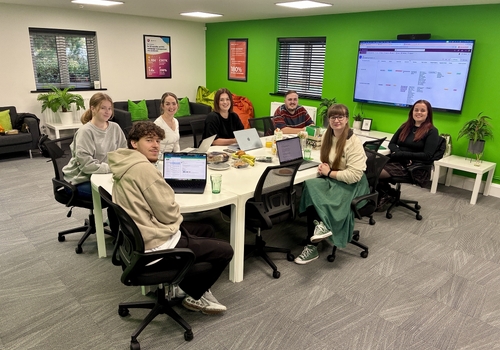
Yeah, yeah, absolutely. I think that’s one of the things that we pride ourselves on in terms of being able to be flexible within the services that we provide. So obviously we provide a lot of different services at GEL Studios. We’ve got 17 of us here now working from where we are in Swindon, and that means that we all work together collectively on all of the projects that we’re working on for a particular client. So that means that we obviously have an ability to collaborate as a proper team for a client, but it also means that we’re able to dial up and dial down individual elements within the team. So one month a client might need web development work, one month it might be actually we’ve got something coming up which is going to require a lot of content or a lot of design work. So what we can do is we can bend and flex with that and make sure that we’ve got the right expert at the right time to be able to deliver what the organisation needs.
Sophie Harflett (13:35):
Yeah, and I mean, as someone who is in the delivery team, it’s really nice that maybe some month I might need a bit of support from one of my coworkers and I can approach them and be like, “Hey, I think we can really do something great for this client if we have a bit of your expertise in it.”
And I think that is a really good place to stop our conversation for today. Thank you so much for joining me. I actually quite learned quite a lot about our sales process and sort of how we go from A to B before it sort of gets to me as a member of the delivery team. So yeah, thank you so much for joining.
David Golding (14:05):
You’re welcome.
Sophie Harflett (14:10):
Thanks so much for watching “What Makes It GEL”. If you’d like to see more, don’t forget to like and subscribe.
Close transcript